Quick Answer
What does siding in Lexington County, SC involve?
Supreme Roofing & Reconstruction discusses siding with property owners in Lexington County, South Carolina. The first step is to understand the visible concern, the building type, and the county and the communities within it before deciding what should be evaluated on site.
Local service discussion
Start with the property—not a one-size-fits-all answer.
Lexington County properties can vary in roof shape, exterior transitions, drainage routes, tree cover, building use, access, and maintenance history. That variation is why a local page should be an entry point to a specific service conversation rather than a promise that every property needs the same work.
A Lexington County discussion should account for the different property settings and travel patterns within the county. A concern reported at one building does not establish the condition of another, so the useful common ground is the evaluation process: identify the roof or exterior system, trace the details that affect water management, and document the scope that fits the property.
For a county-wide request, useful details include the part of the property affected, when the condition was noticed, whether it is recurring, and what prior work or information is available. Those details help frame an onsite evaluation.
About Lexington County
Context for a local property conversation.
Lexington County is one of the county communities included in this South Carolina service map. For Lexington County, this page is designed to help a property owner begin a specific Lexington County service conversation, not to assign a remote diagnosis or a standard package. The Lexington County page is a starting point for documenting lexington county roof and exterior conditions before an onsite evaluation. A Lexington County request can capture an issue at a roof edge, outline a change in an exterior material, compare the path from runoff collection to discharge, and address the access and protection details relevant to the property. The locality is useful here as a way to organize the property record: what is happening, where it is happening, and which exterior details should be examined in person. This record can be especially useful when it explains how the concern relates to the building layout, exterior transitions, drainage direction, and practical access. The property notes can also include roof penetrations, roof valleys, downspout discharge, and sensitive exterior areas.
For a property in Lexington County, the useful starting point is the building itself: its lexington county roof slopes, lexington county wall transitions, lexington county drainage paths, and lexington county property access. A Lexington County owner can also identify the roof or exterior system involved, the location of an issue at a roof edge, the route water follows, and any prior lexington county work. For Lexington County, that information should be capture as a lexington county property profile before any scope is suggested. It is useful to outline whether the access and protection details relevant to the property changes the work plan, compare how the path from runoff collection to discharge connects to another exterior surface, and address what a change in an exterior material reveals about the visible system. A lexington county review can then connect roof penetrations to roof valleys, downspout discharge, and sensitive exterior areas before the work is planned. Those lexington county details make it possible to use related routes for Batesburg Leesville, Cayce, Chapin as navigation while keeping the eventual scope tied to the individual property.
Across Lexington County, property settings can differ from community to community. The common thread is the need to connect the reported condition to the individual building, its roof or exterior system, how water is managed, and the practical access needed for an onsite evaluation. A local Lexington County request is clearer when the owner can point to lexington county low rooflines, lexington county higher roof connections, lexington county penetrations, or lexington county roof-to-wall transitions—along with what has changed and when it was noticed. Lexington County gutter outlets, Lexington County driveway access, Lexington County landscaping protection, and Lexington County older repair locations can affect the questions that belong in an onsite evaluation. For Lexington County, the discussion should stay grounded in the local property and the information available from the owner—not a borrowed recommendation for another community. Lexington and county conditions, driveway access, prior work, and the observed exterior detail can all shape the next questions.
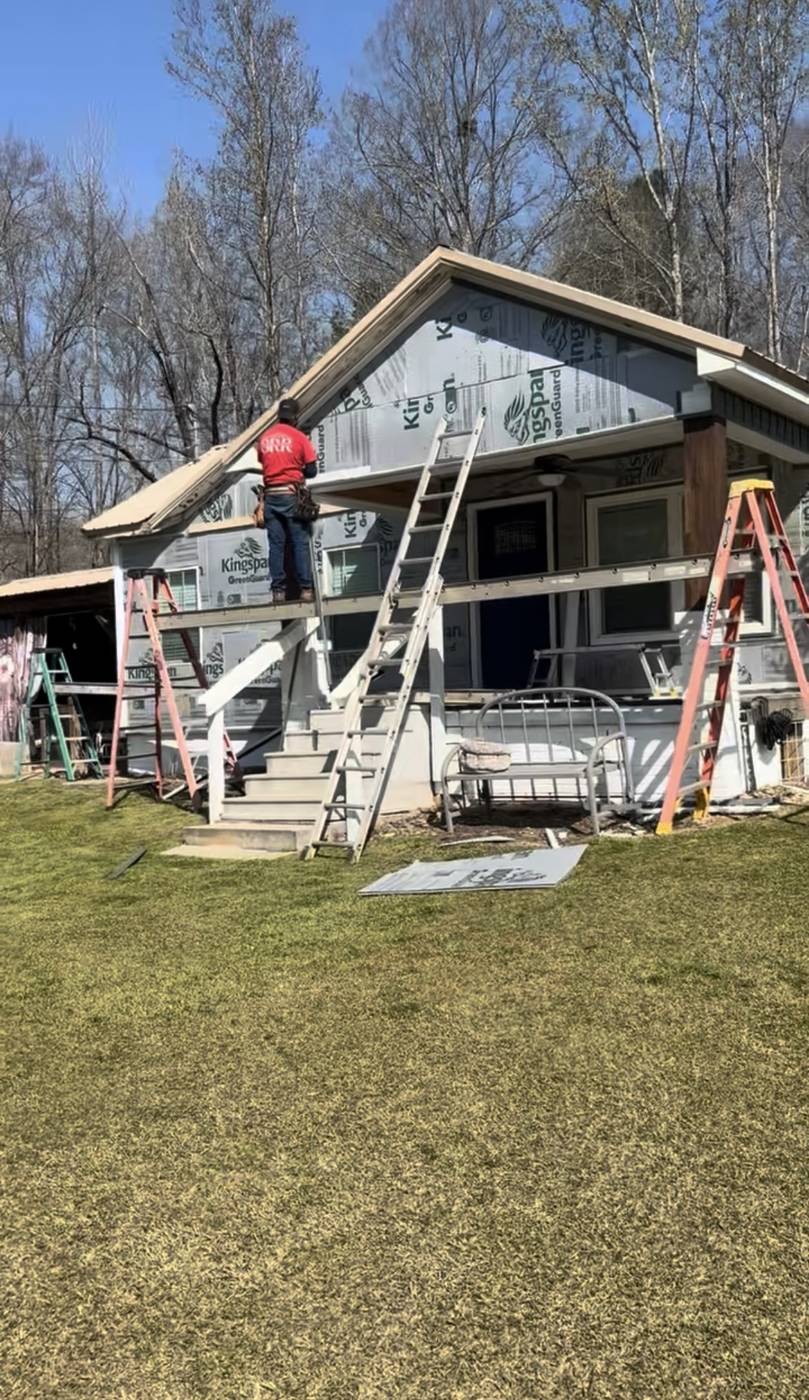
For siding work in Lexington County, it helps to separate the visible panel or trim concern from the surrounding wall details. Openings, roof-to-wall transitions, fascia, soffit, material matching, and the possibility of conditions behind cladding all affect the questions that need an onsite review.
Service focus
Siding for Lexington County properties
Siding, trim, soffit, fascia, openings, and roof-to-wall transitions form a connected exterior system. A visible panel concern can be related to the way water is directed at an opening or roof edge.
A useful site visit considers the observable condition, material-match questions, the areas behind the cladding that need closer review, and how the proposed exterior work connects to the rest of the property.
For siding work, the decision should account for the wall surface as well as trim, openings, roof-to-wall transitions, material matching, and any conditions behind the cladding that require closer inspection.
When the condition overlaps with another exterior question, review the related roof repair in Lexington County discussion rather than treating every concern as a standalone service.
For a nearby comparison of the same service, the siding in Batesburg-Leesville page explains the related local path without replacing a property-specific evaluation.
For Lexington County: the evaluation should connect the reported concern to the relevant roof or exterior detail, building use, access, and drainage path. That creates a useful scope rather than a city-name-only recommendation.
What to discuss
Questions worth answering before work is scheduled
- Where the condition is visible and what has changed over time
- The roof or exterior system involved, including transitions and drainage details
- Access, property protection, material questions, and building use
- What can be confirmed on site and what requires closer inspection
Explore relevant pages
Related Lexington County and South Carolina service information
Related local pages: siding in Batesburg-Leesville, siding in Cayce, siding in Chapin.
Frequently asked questions
Siding questions for Lexington County, SC
Can one siding area be repaired?
In some cases, yes. Material availability, matching, the condition behind the cladding, and the cause of damage all affect the answer.
Why include trim and flashing?
Those details manage transitions where water can enter an exterior wall and should be considered with the cladding.